Hello Readers!
I am back. I think that I needed a little break for the last quarter or so. I was feeling a bit over-burdened with everything. But, as this quarter winds down I've been feeling a need to update you all and spend some time writing about where I am in the process.
I'm completing my second year of the PhD program at the end of this quarter. The American PhD system is (at least at my school) structured differently than it is in other countries. At my university, we spend the first two years taking courses (from what I understand, and please correct me if I'm wrong, most schools overseas don't have as much, if any, structured coursework). While none of the course are required, the majority of them are recommended. Upon completion of these courses, the student starts to write their qualifying exam papers. Once these are complete and have been reviewed by the student's qualifying exam committee, the student takes the exam (which is an oral exam administered by the committee). A student is allowed two attempts to pass the exam, and if she passes, she is now a PhD candidate. This is called "advancing to candidacy."
The qualifying exam papers are on three topics: a literature review, theory, and measurement (at least for quantitative researchers). The theory and measurement papers should (but, they don't have to!) establish the theoretical grounding and means of measurement for one's dissertation research. They are also the first chapters of one's dissertation.
The committee (once again, this might be university specific) is made up of four (or more) experts in various topics, aspects, statistical methods, etc., that relate to one's dissertation research. I am very happy to say that I have chosen my committee members and they have all agreed to be on my committee! Now, there is a bunch of paperwork to start on to get that all formalized and then I start writing. This summer will be dedicated to writing my papers. I hope to defend (take the exam) in mid-fall. I'm both VERY excited and VERY nervous. I am also very lucky as two of my classmates are on the same timeline as I am, so we can support each other.
So, now that I've outlined what's coming in the program, let me rewind and talk a bit about the focus of my last two quarters: funding. I applied for seven different funding opportunities over the last two quarters. My current funding ends at the end of this quarter, and I haven't had a job (a restriction of my current fellowship) in almost two years. The seven funding opportunities included fellowships, federal research grants, and university scholarships. I have heard back from two: one I have been awarded (it will specifically help with tuition, which takes a huge weight off my shoulders) and one I was denied (it's okay - I'll apply again next year). I'm still waiting to hear the results for the other five.
I've also started looking for work. The next few years of the process will be less structured by classes, which will leave more time for work. BUT! People get this far in a PhD and then stop, or get distracted, and never go back. There is actually a well-known term for it, "ABD" or " all but the dissertation." This is probably partly related to the sudden loss of structure. So, my goal is to not be working full-time, but only enough to stay afloat. I will need lots of time to continue to make progress on my own work.
That's where I am now. I'm going to try to update a bit more frequently, especially as I make progress in the qualifying process.
Have a great day!
Showing posts with label PhD Info. Show all posts
Showing posts with label PhD Info. Show all posts
Tuesday, May 29, 2012


Thursday, March 1, 2012
The Doldrums
I love the term "the Doldrums." It is the name ancient mariners used to describe an area of the ocean where the wind disappears and you just loll around going nowhere and getting seasick. It is so descriptive of where I am in this program!
I am still taking classes, but the feel of the program is subtly shifting. Our focus is being directed by our mentors towards less guided endeavors. Even the classes are less guided. The assignments are much less directed and there are fewer of them. We're expected to be writing for publication and looking for funding.
The perpetual pursuit of funding has started for me. From what I can tell, this is the start of the rest of my life. Obtaining funding is an essential part of the academic role. As I write a large grant and apply for scholarships from EVERYWHERE, I am solidifying my personal statement, career goals and learning how to describe the importance of my work in 250 words or less. It's harder than it sounds!
Because I've spent a lot of time this quarter working on funding applications, I'd like to write a bit about a very important question for nurses considering going back to school: "How will I pay for it?"
It's a good question.
First, you will learn to live on less. Even the few people in my cohort who have kept working have had to or wished that they could cut back on work, which means cutting back on their money. There may be people who work full-time through their PhD program, but I would argue that they do not have the experience that I'm having - their ability to publish, attend and present at important conferences, or participate in their mentor's research may be reduced. That's a problem because those are things that build your credibility as a nurse researcher.
Next, I'd like to reassure everyone that there is funding out there. The NIH has predoctoral grants, most programs have funding, there are private funding options, and of course loans. Ask your school to help guide you. They should have resources. If not, get on online and apply for the funding that is available to you. Look for loans, I'm not sure any of us will get out of this program without taking at least one or two loans. And finally, spend less. I immediately put my loans from my master's degree on deferment. I don't have a car, we live in a rental with a whole bedroom less than before, and I don't but things that aren't essential. Instead, I have Pinterest boards where I keep all the things that I want in sight, so someday, later, if I still want them, I can find them. It isn't easy, but we're doing okay. If there are people in PhD programs who read this blog and have other suggestions on how to find money and survive financially during the doctorate, I would love to hear them - they might help me too!
Have a great Thursday everyone!
I am still taking classes, but the feel of the program is subtly shifting. Our focus is being directed by our mentors towards less guided endeavors. Even the classes are less guided. The assignments are much less directed and there are fewer of them. We're expected to be writing for publication and looking for funding.
The perpetual pursuit of funding has started for me. From what I can tell, this is the start of the rest of my life. Obtaining funding is an essential part of the academic role. As I write a large grant and apply for scholarships from EVERYWHERE, I am solidifying my personal statement, career goals and learning how to describe the importance of my work in 250 words or less. It's harder than it sounds!
Because I've spent a lot of time this quarter working on funding applications, I'd like to write a bit about a very important question for nurses considering going back to school: "How will I pay for it?"
It's a good question.
First, you will learn to live on less. Even the few people in my cohort who have kept working have had to or wished that they could cut back on work, which means cutting back on their money. There may be people who work full-time through their PhD program, but I would argue that they do not have the experience that I'm having - their ability to publish, attend and present at important conferences, or participate in their mentor's research may be reduced. That's a problem because those are things that build your credibility as a nurse researcher.
Next, I'd like to reassure everyone that there is funding out there. The NIH has predoctoral grants, most programs have funding, there are private funding options, and of course loans. Ask your school to help guide you. They should have resources. If not, get on online and apply for the funding that is available to you. Look for loans, I'm not sure any of us will get out of this program without taking at least one or two loans. And finally, spend less. I immediately put my loans from my master's degree on deferment. I don't have a car, we live in a rental with a whole bedroom less than before, and I don't but things that aren't essential. Instead, I have Pinterest boards where I keep all the things that I want in sight, so someday, later, if I still want them, I can find them. It isn't easy, but we're doing okay. If there are people in PhD programs who read this blog and have other suggestions on how to find money and survive financially during the doctorate, I would love to hear them - they might help me too!
Have a great Thursday everyone!
Wednesday, January 4, 2012
The Heat is On
The holidays have officially passed. This break was a particularly strange one for me and not very restful. For some reason, it seems to have gone by too quickly and the things that I needed to accomplish during it have not all been finished. This isn't that surprising to me, but I do feel like I never really got to turn off my anxiety from the previous quarter. Since the start of this second year of the program, I have had this constant, low-level sense of anxiety that goes everywhere with me.
After I finished my master's degree, it took me almost a year to completely lose that non-stop, niggling sense of stress. I attributed it to the incredible pressure that I was under to complete a dual certification and work full-time to pay for it. Also, with school, unlike a regular nursing job, you bring so much of the work home with you. My primary study space is my living room. If I stop to read a non-assigned book or watch TV, my giant piles of work stare at me from my desk like enormous lurking guilt-creatures. Every minute that I spend not studying is a minute that I have lost.
At the end of last quarter (AKA the quarter where I took WAY too many classes), I had planned to start working very seriously on my new quest for funding. But, I just couldn't get started. So, here I am, with only a few days until the next quarter starts finally beginning the writing that I should have started three weeks ago. I honestly have no idea how this happened. Nonetheless, this quarter is the quarter where I will be doing the bulk of the applications and proposals for funding for next year. This will be in addition to my other classes. Today, I need to write part of a proposal, continue readings for the first week of classes next week, and build my spreadsheet of funding sources. It really isn't feeling like a break anymore.....
The new quarter starts in a few days!
After I finished my master's degree, it took me almost a year to completely lose that non-stop, niggling sense of stress. I attributed it to the incredible pressure that I was under to complete a dual certification and work full-time to pay for it. Also, with school, unlike a regular nursing job, you bring so much of the work home with you. My primary study space is my living room. If I stop to read a non-assigned book or watch TV, my giant piles of work stare at me from my desk like enormous lurking guilt-creatures. Every minute that I spend not studying is a minute that I have lost.
At the end of last quarter (AKA the quarter where I took WAY too many classes), I had planned to start working very seriously on my new quest for funding. But, I just couldn't get started. So, here I am, with only a few days until the next quarter starts finally beginning the writing that I should have started three weeks ago. I honestly have no idea how this happened. Nonetheless, this quarter is the quarter where I will be doing the bulk of the applications and proposals for funding for next year. This will be in addition to my other classes. Today, I need to write part of a proposal, continue readings for the first week of classes next week, and build my spreadsheet of funding sources. It really isn't feeling like a break anymore.....
The new quarter starts in a few days!
Wednesday, November 9, 2011
Week 7 - Almost Done or Almost Out of Time
Yesterday, I was reminded of two of my parents' sayings.
My dad used to say, "What doesn't kill you makes you stronger."
My mom would say, "Try to see what this experience is teaching you."
I hate both of those sayings. It is even more annoying that they are both true and useful.
In my fourth and often, most difficult, class I have had to struggle with trying to determine what I was learning. And even more importantly, how the class was benefiting me and my developing research skills. But, yesterday that all became a lot more clear. So, while I would still recommend that PhD students attempt to take classes that are useful to their education and future research, I would also remind us (me included) that usefulness can be defined in many, many ways. AND, I would refer us all back to my mother's saying above. There is almost always something that can be learned!
So, week seven. I think that these last few weeks are always the hardest. Papers and projects are looming, but classes are still continuing at full pace. This year, two of my classes require the final papers in the 10th week of the quarter instead of the 11th, which is the typical "finals week." In addition, we have projects coming up at my research residency. I'm feeling a little pinched for time.
However, this year I don't feel overwhelmed. My favorite holidays are approaching, I'm in a much better place in this program - I have a research question and a plan, and I've been feeling pretty accomplished lately. For everybody in the first year, I would like to tell you that the second year isn't easier, but it is better!

My dad used to say, "What doesn't kill you makes you stronger."
My mom would say, "Try to see what this experience is teaching you."
I hate both of those sayings. It is even more annoying that they are both true and useful.
In my fourth and often, most difficult, class I have had to struggle with trying to determine what I was learning. And even more importantly, how the class was benefiting me and my developing research skills. But, yesterday that all became a lot more clear. So, while I would still recommend that PhD students attempt to take classes that are useful to their education and future research, I would also remind us (me included) that usefulness can be defined in many, many ways. AND, I would refer us all back to my mother's saying above. There is almost always something that can be learned!
So, week seven. I think that these last few weeks are always the hardest. Papers and projects are looming, but classes are still continuing at full pace. This year, two of my classes require the final papers in the 10th week of the quarter instead of the 11th, which is the typical "finals week." In addition, we have projects coming up at my research residency. I'm feeling a little pinched for time.
However, this year I don't feel overwhelmed. My favorite holidays are approaching, I'm in a much better place in this program - I have a research question and a plan, and I've been feeling pretty accomplished lately. For everybody in the first year, I would like to tell you that the second year isn't easier, but it is better!

 |
| Boris likes to help me write papers... |
Tuesday, November 1, 2011
A How To Guide for the PhD Student Who Has Chosen Option B...
At the start of this quarter I was presented with a choice. I could do the best thing for my sanity and limit my course load to three or I could do the politically appropriate thing and take an additional course that needed more people to continue. I chose option B.
I would like to say that I did this because I understood the inherent political ramifications of refusing to take a course offered the department of which I am a member, or I could tell the truth and say that I did it because a friend asked me to. I guess the previous sentence gave away my actual motivation - the political benefit was only pointed out to me later by my mentor.
The end result of choice B is that I signed up for a fourth class. This is not a bad thing in and of itself, and I went into it with the view that it was a course I had expected to take and that it would be useful for me so it would probably be okay in the end. This was incorrect. No, let's phrase this a little better: My assumption was flat-out, no questions asked, unequivocally WRONG. And I would have dropped the class after my first attended day, but someone had already pointed out the political ramification issue and I felt stuck. Actually, beyond feeling stuck, I am, in reality, wedged like Winnie-the Pooh trying to get out a tiny window in a Milne story.
So, here is a how-to guide for when my readers someday get stuck in a class that they wish they hadn't taken:
1. Drop the class.
No really, if it is at all possible, drop the class. Now, I am not advocating dropping classes that are hard, or boring, or that have a lot of reading. I am only advocating dropping a class if it meets ALL of these three requirements: It is useless to you, and not required and taking up a ton of time and (this requirement is optional) possibly sucking the joy from your life.
2. If #1 is truly not possible, attempt to continue, using the following techniques:
Addendum: After discussion with my husband, he did point out that someone reading this might think that I disliked the class. I want to clarify. I really like the class. I just don't have room for things that aren't directly applicable at this point. This class offers the benefits of practicing critical thinking, critique, logical reasoning skills and some really important discussion. I just wish they were directly applicable to my work!
I would like to say that I did this because I understood the inherent political ramifications of refusing to take a course offered the department of which I am a member, or I could tell the truth and say that I did it because a friend asked me to. I guess the previous sentence gave away my actual motivation - the political benefit was only pointed out to me later by my mentor.
The end result of choice B is that I signed up for a fourth class. This is not a bad thing in and of itself, and I went into it with the view that it was a course I had expected to take and that it would be useful for me so it would probably be okay in the end. This was incorrect. No, let's phrase this a little better: My assumption was flat-out, no questions asked, unequivocally WRONG. And I would have dropped the class after my first attended day, but someone had already pointed out the political ramification issue and I felt stuck. Actually, beyond feeling stuck, I am, in reality, wedged like Winnie-the Pooh trying to get out a tiny window in a Milne story.
So, here is a how-to guide for when my readers someday get stuck in a class that they wish they hadn't taken:
1. Drop the class.
No really, if it is at all possible, drop the class. Now, I am not advocating dropping classes that are hard, or boring, or that have a lot of reading. I am only advocating dropping a class if it meets ALL of these three requirements: It is useless to you, and not required and taking up a ton of time and (this requirement is optional) possibly sucking the joy from your life.
2. If #1 is truly not possible, attempt to continue, using the following techniques:
- From day one (or as early as you realize the class is only pain) begin reading the required readings for the sole purpose of fulfilling the required assignments. Look for the answers! Usually, I read things in this program as a thinking, knowledge-gaining exercise. I read them critically and I think about them long after I've stopped reading them. Not in a class like this. I am looking for the way to write the paper and save time for other readings!
- Spend time actively trying to apply (even if you've decided that it isn't possible) something from the class to your area of interest. If nothing else this is a thinking exercise and will keep you moderately engaged.
- Ask for help. From the professor, the other students in your class, or someone who has taken it before.
- Move towards a place of acceptance and recognize that you may not get an A, ever use the material, or feel good about taking the time to take this course. Remember hopelessness does not help you finish the readings....
Addendum: After discussion with my husband, he did point out that someone reading this might think that I disliked the class. I want to clarify. I really like the class. I just don't have room for things that aren't directly applicable at this point. This class offers the benefits of practicing critical thinking, critique, logical reasoning skills and some really important discussion. I just wish they were directly applicable to my work!
Wednesday, September 14, 2011
Adjusted. (My Attitude That Is...)
I'm back and I'm much less fussy. I apologize for my last post. I was feeling pretty foul.
The reality of the PhD process is that there are some bad days. In speaking with some close friends, who are also members of my cohort, we concluded that a lot of this process is....humiliating, for lack of a better word.
Before my last post, it was requested that I write up a proposal as a part of my attempt to gain access to one of the datasets that I am interested in using for my dissertation. I made my best attempt at doing that, and got some criticism in return. It happens and it is good for me. Usually, I take criticism well, especially if it is constructive and from someone with an expertise in that area, which this was. Additionally, it wasn't mean-spirited or nit-picky. I think what made it sting more than it should have was that the response wasn't just sent to me, but to a few other people as well. Having spent some time reflecting on this, and having had some further interaction with everybody, I really think that nothing negative was intended. And, they certainly haven't said that I can't have access, so....
It was also a good reminder that science isn't a private endeavor. We don't want it to be. Good science is performed in the open, so that it can be commented upon, improved upon and done well. (However, since I work in a topic area that can be contentious, I would like to clarify that it is our peers in the scientific community, not just anybody, who should be commenting on the science. Ethical considerations are, of course, open to all....)
On another note, I want to talk briefly about some common sense things I've learned over the last year regarding publications. First, if you work on it, try to get your name on it. I know that may seem pretty basic. And before this week, I would have laughed at the suggestion that I would be so foolish as to work on something and not be a named author. Alas, irony is cruel.
Remember my mother's saying (paraphrasing someone named Brandon Mull), "Smart people learn from their mistakes. Brilliant people learn from the mistakes of others." Be brilliant, learn from the people who have gone before.
Next, if you are getting funding from some entity, that funding must be mentioned in the publication. I was informed of this by the agency that funds me, and I have been careful to stress that my funding must be mentioned to the publishers of my (very few, but hopefully, soon to be greater in number) articles. I would not have known this, though, unless someone had told me.
Finally, use a citation software when you write articles. I am not going to name one because they all have flaws, and I'm not completely satisfied with any that I've tried. They are, however, really, really important if you write something and then need to change the citation style. Also, if you use it as you're writing, which is what I do, the program is able to organize your reference list and store your references for future papers. I tend to write things in APA format since that's what I used in both my undergraduate and master's program. However, I've had to submit papers in numbered notation and without the software, I would have had to go back and do that by hand. Which would have been really a bad experience. So, use something. For your own sanity.
School starts next week! I'm nervous and excited and completely amazed that I'm already starting the second year. To all readers who are starting programs this fall, I send you all of my hope that you will have as wonderful a first year as I did!!!
The reality of the PhD process is that there are some bad days. In speaking with some close friends, who are also members of my cohort, we concluded that a lot of this process is....humiliating, for lack of a better word.
Before my last post, it was requested that I write up a proposal as a part of my attempt to gain access to one of the datasets that I am interested in using for my dissertation. I made my best attempt at doing that, and got some criticism in return. It happens and it is good for me. Usually, I take criticism well, especially if it is constructive and from someone with an expertise in that area, which this was. Additionally, it wasn't mean-spirited or nit-picky. I think what made it sting more than it should have was that the response wasn't just sent to me, but to a few other people as well. Having spent some time reflecting on this, and having had some further interaction with everybody, I really think that nothing negative was intended. And, they certainly haven't said that I can't have access, so....
It was also a good reminder that science isn't a private endeavor. We don't want it to be. Good science is performed in the open, so that it can be commented upon, improved upon and done well. (However, since I work in a topic area that can be contentious, I would like to clarify that it is our peers in the scientific community, not just anybody, who should be commenting on the science. Ethical considerations are, of course, open to all....)
On another note, I want to talk briefly about some common sense things I've learned over the last year regarding publications. First, if you work on it, try to get your name on it. I know that may seem pretty basic. And before this week, I would have laughed at the suggestion that I would be so foolish as to work on something and not be a named author. Alas, irony is cruel.
Remember my mother's saying (paraphrasing someone named Brandon Mull), "Smart people learn from their mistakes. Brilliant people learn from the mistakes of others." Be brilliant, learn from the people who have gone before.
Next, if you are getting funding from some entity, that funding must be mentioned in the publication. I was informed of this by the agency that funds me, and I have been careful to stress that my funding must be mentioned to the publishers of my (very few, but hopefully, soon to be greater in number) articles. I would not have known this, though, unless someone had told me.
Finally, use a citation software when you write articles. I am not going to name one because they all have flaws, and I'm not completely satisfied with any that I've tried. They are, however, really, really important if you write something and then need to change the citation style. Also, if you use it as you're writing, which is what I do, the program is able to organize your reference list and store your references for future papers. I tend to write things in APA format since that's what I used in both my undergraduate and master's program. However, I've had to submit papers in numbered notation and without the software, I would have had to go back and do that by hand. Which would have been really a bad experience. So, use something. For your own sanity.
School starts next week! I'm nervous and excited and completely amazed that I'm already starting the second year. To all readers who are starting programs this fall, I send you all of my hope that you will have as wonderful a first year as I did!!!
Sunday, August 7, 2011
Research Residencies
I know that I promised everybody a discussion about research residencies a looooong time ago. I apologize for the delay! I'll go ahead and post that information tonight.
First, a disclaimer: I'm not entirely sure if a research residency is a requirement in other PhD programs and additionally, I'm not sure if they are actually called "research residencies" even if they are required. However, I suspect that most programs that are offered in research intensive universities would require that a student gain some hands on research experience during their courses.
In my university (which shall remain nameless to protect my anonymity and ability to post honestly), roughly two quarters, or the equivalent credit hours of work done over a different number of quarters, are required. Additionally, the research residency must be performed before a student can write their qualifying exams, which I've written about previously. Since most people "write their quals" as it is called during the summer and/or fall following their second year, it is a good idea to do the research residency late in the first year or early in the second.
What each student does as a part of their residency is fairly unstructured. It should be something new, the student should learn something, and ideally, it would also benefit the professor or researcher. I have had classmates who have helped investigators file their IRB (Institutional Review Board or ethics committee) applications, help with participant interviews, write or edit publications, enter data, clean data, run statistical analyses or help with qualitative interpretation of data. While it might be nice to participate on a research project that directly related to a student's area of interest, that is not required.
Research residencies get chosen based on research topic, opportunities to learn necessary skills, comfort with a particular researcher, interest in an aspect of research that won't be covered in a student's program or sheer convenience. Some students, who are really quick, are able to negotiate credit for a research assistance-ship. Essentially what that neat trick results in is getting both credit and payment. To do that, a student would usually have a ton of work, and would exchange money for credit hours or credit hours for money. Hmmm, that came out wrong! I made it sound like a research drug deal - let me rephrase. Most students who are able to mix a research assistance-ship and research residency would get fewer than the usual three credit hours per quarter and not the full monetary benefit of the research assistance-ship position. It's both a win-win and lose-lose if you look at it closely.
The general consensus is that they are quite a bit of fun, if also a ton of work. My residency has so far helped me to feel very close to actual research, but it has also made me realize how amazing it is that any research gets done! The paperwork, huge amounts of data to be analyzed, committees, review boards, and work are stunning! I'm hoping to stay in my residency through December. Right now, I'm doing pretty much anything that I can to help. I've entered and cleaned data, done a bit of research on a topic that related peripherally to the project, helped the PI (primary investigator) do some paperwork, summed up other relevant research articles into little briefs for people, and been allowed to sit in on meetings.
So, that is the information. For the next few months, I'll be writing about my research residency in addition to my courses. Fall quarter is seeming closer every day now!
First, a disclaimer: I'm not entirely sure if a research residency is a requirement in other PhD programs and additionally, I'm not sure if they are actually called "research residencies" even if they are required. However, I suspect that most programs that are offered in research intensive universities would require that a student gain some hands on research experience during their courses.
In my university (which shall remain nameless to protect my anonymity and ability to post honestly), roughly two quarters, or the equivalent credit hours of work done over a different number of quarters, are required. Additionally, the research residency must be performed before a student can write their qualifying exams, which I've written about previously. Since most people "write their quals" as it is called during the summer and/or fall following their second year, it is a good idea to do the research residency late in the first year or early in the second.
What each student does as a part of their residency is fairly unstructured. It should be something new, the student should learn something, and ideally, it would also benefit the professor or researcher. I have had classmates who have helped investigators file their IRB (Institutional Review Board or ethics committee) applications, help with participant interviews, write or edit publications, enter data, clean data, run statistical analyses or help with qualitative interpretation of data. While it might be nice to participate on a research project that directly related to a student's area of interest, that is not required.
Research residencies get chosen based on research topic, opportunities to learn necessary skills, comfort with a particular researcher, interest in an aspect of research that won't be covered in a student's program or sheer convenience. Some students, who are really quick, are able to negotiate credit for a research assistance-ship. Essentially what that neat trick results in is getting both credit and payment. To do that, a student would usually have a ton of work, and would exchange money for credit hours or credit hours for money. Hmmm, that came out wrong! I made it sound like a research drug deal - let me rephrase. Most students who are able to mix a research assistance-ship and research residency would get fewer than the usual three credit hours per quarter and not the full monetary benefit of the research assistance-ship position. It's both a win-win and lose-lose if you look at it closely.
The general consensus is that they are quite a bit of fun, if also a ton of work. My residency has so far helped me to feel very close to actual research, but it has also made me realize how amazing it is that any research gets done! The paperwork, huge amounts of data to be analyzed, committees, review boards, and work are stunning! I'm hoping to stay in my residency through December. Right now, I'm doing pretty much anything that I can to help. I've entered and cleaned data, done a bit of research on a topic that related peripherally to the project, helped the PI (primary investigator) do some paperwork, summed up other relevant research articles into little briefs for people, and been allowed to sit in on meetings.
So, that is the information. For the next few months, I'll be writing about my research residency in addition to my courses. Fall quarter is seeming closer every day now!
Monday, July 25, 2011
Summer School
There have been lots of new developments since my last post. First, I've started my research residency. Second, we adopted a new kitten named Boris. And finally, I seemed to have started having panic attacks. And no, I don't think these are all connected...much. Maybe I should talk a little about each one separately...
My research residency is at a wonderful, wonderful place! Amazing research is performed there and I am soooo lucky to be there, even in my limited role. I've only been in for one week and already I love it. Right now my residency isn't particularly well-defined, but I'm expecting a more narrowly focused project or area to eventually emerge. For now, I read a lot, spend a lot of time feeling pretty intimidated, and attempt to absorb any of the intelligence that just seems to be floating around the office!
After a long period of mourning for our companion animal, KitKit, we have adopted a new shelter kitten, Boris. He is very sweet and really cute. However, I had totally forgotten how *crazy* kittens are! I'm putting a picture of him after this paragraph:
Hopefully, in the next few months, he will stop chewing cords and start sleeping more at night. Until then, I will keep unplugging everything in my apartment at night and sleeping with earplugs!
Finally, my new and weird pseudo-panic attacks began last week. I have no idea what they are or why they are occurring. Basically, I start feeling really sweaty and panicky and short of breath and then it passes. It only happens when I have to speak in front of a group or when I'm in high-stress situation. I am hoping that they go away. Soon. I do think that they are a result of stress, but why they would start after I have just returned from a vacation doesn't make much sense to me. I kind of think that they might be my brain's way of protesting my return to work and school.
Anyway, things are going very well in general. Once I've spent a little more time in my research residency, I'll write a post with some more information on research residencies.Talk to you soon!
My research residency is at a wonderful, wonderful place! Amazing research is performed there and I am soooo lucky to be there, even in my limited role. I've only been in for one week and already I love it. Right now my residency isn't particularly well-defined, but I'm expecting a more narrowly focused project or area to eventually emerge. For now, I read a lot, spend a lot of time feeling pretty intimidated, and attempt to absorb any of the intelligence that just seems to be floating around the office!
After a long period of mourning for our companion animal, KitKit, we have adopted a new shelter kitten, Boris. He is very sweet and really cute. However, I had totally forgotten how *crazy* kittens are! I'm putting a picture of him after this paragraph:
 |
| Boris, 12 weeks old |
Finally, my new and weird pseudo-panic attacks began last week. I have no idea what they are or why they are occurring. Basically, I start feeling really sweaty and panicky and short of breath and then it passes. It only happens when I have to speak in front of a group or when I'm in high-stress situation. I am hoping that they go away. Soon. I do think that they are a result of stress, but why they would start after I have just returned from a vacation doesn't make much sense to me. I kind of think that they might be my brain's way of protesting my return to work and school.
Anyway, things are going very well in general. Once I've spent a little more time in my research residency, I'll write a post with some more information on research residencies.Talk to you soon!
Monday, July 18, 2011
I'm back!
I arrived back in town yesterday and I already feel the need to jump back into work! The time off allowed me to clarify my goals for this summer in relation to the program. So here they are...
My goals for this summer:
1. Research residency
2. Find a data-set to use
3. Submit two papers for publication
4. Critical literature reviews on two possible dissertation topics
5. Finish my presentation preparation for the conference in October
6. Catch up on my nursing journal readings
I have a meeting this week on my research residency, and I'm in contact with someone regarding a possible data-set (after trying to contact three other people and getting no response...). Also, one of the papers to submit only needs edits.
I'll keep you updated!
I thought that I would close with a picture from my summer vacation...

My goals for this summer:
1. Research residency
2. Find a data-set to use
3. Submit two papers for publication
4. Critical literature reviews on two possible dissertation topics
5. Finish my presentation preparation for the conference in October
6. Catch up on my nursing journal readings
I have a meeting this week on my research residency, and I'm in contact with someone regarding a possible data-set (after trying to contact three other people and getting no response...). Also, one of the papers to submit only needs edits.
I'll keep you updated!
I thought that I would close with a picture from my summer vacation...

Wednesday, June 8, 2011
Year-End Summary and Summer Intentions
I am at the end of my first year of doctoral work! It went by very, very quickly. I had planned on writing a summary full of important conclusions for you all, but I don't think that I've processed it that completely yet. Instead I have a list of tips for you, some thoughts, and a quick note about my summer postings.
Tips (In no particular order, except for number 1, which is the most important...):
I will be posting during the summer, but the posts will be sporadic. I've added some ways to follow the blog on e-mail, I hope those make it easier for people to know when I've posted something new. I'm hoping to do a research residency and I'm looking for data-sets for my dissertation. I think that those things might be useful to talk about a little as I do them. During the first part of the summer, though, I'll be traveling and my posts will probably be mostly pictures of those travels.
Finally, thanks to everyone who commented, discussed or just read this blog! I have loved your comments and input and I hope that you all keep reading!
Tips (In no particular order, except for number 1, which is the most important...):
- Get to know your cohort and create or find a group of friends from your cohort.
- Your family, close friends and spouse/partner want to help you. But this is an experience that is hard to fathom unless you are actively participating in it. You will need this group of friends!
- Read everything.
- This is not the time to be skimping on the assigned readings.
- Draft your papers in advance.
- Give yourself time to re-write them and edit them a few times before you turn them in.
- Be committed.
- This is a process that could take all of your time. Everyday. You need to give it as much as you can without going nuts. A lot of this program is "guided," no one is spoon-feeding us anymore - your commitment is what will make the difference.
- Advisers are tricky, and every adviser/advisee relationship is unique.
- Some of you will meet your adviser and know that you have made a friend for life. Some of you will not. My goal with my adviser is to make her laugh every time I see her; she looks like she needs it, and I keep thinking that humanity's common ground has to be humor, right?
- This is not a sprint.
- You're a distance runner now. If you get out of the program fast, awesome, if you don't, well, you'll still make a "unique contribution to science" and make it out someday!
- Maintain your life. AKA: Be well-rounded. AKA: Get a hobby!
- Balance was hard for me, but it is so important. One of my cohorters is a competitive bike racer, another is in a community symphony. I am a runner and a traveler; I jog as often as I can and I'm always planning my next trip. Someone else I know in a program across the country writes fanfiction. Learn to knit. I don't care what it is, don't let it get lost! These are things that keep you sane.
- Be kind to yourself.
- I made mistakes, I did things wrong, and this program has been hard on me, my ego, and my heart at times. But, in the end, I'm a great nurse, and this is just me trying to fulfill my full potential. Nobody will live or die based on my PhD experience and I'm already pretty awesome. You are too - don't forget it.
I will be posting during the summer, but the posts will be sporadic. I've added some ways to follow the blog on e-mail, I hope those make it easier for people to know when I've posted something new. I'm hoping to do a research residency and I'm looking for data-sets for my dissertation. I think that those things might be useful to talk about a little as I do them. During the first part of the summer, though, I'll be traveling and my posts will probably be mostly pictures of those travels.
Finally, thanks to everyone who commented, discussed or just read this blog! I have loved your comments and input and I hope that you all keep reading!
Wednesday, May 25, 2011
Week 9, Reassurance, and Some New Thoughts on Working During the Program
First, I want to say to all my readers that it is week 9 of the third quarter! I am both terrified by this (because due dates are looming) and so happy that it almost makes me jittery (the end of this first year is in sight)! I also really, really wanted to say to every nurse considering doctoral studies that this quarter was not that bad. I apologize for painting it in such a bad light. It wasn't the quarter that was awful, it was everything that happened around me in my life. The problem of course is that school and non-school interact to create an entirely different effect on one's life than either of the two separately ever could. (As an aside, the idea of an "interaction" is a statistical one as well as a term that we use in everyday language. Statistics - it pops up everywhere...)
I wanted to mention and discuss two pieces of advice that I was told near the beginning of this program as my opinion on both has been modified over the course of this first year. First, in the beginning of the program, lots of professors, your advisor, and other students like to give advice about working during the program. I've also written briefly about it on this blog. All of this advise will conflict. I was not forced to make a choice about working or not working as my funding restricted my work outside of the program. But, I have volunteered my time as a nurse practitioner and midwife at a clinic as I didn't want to lose any skills. Also, I couldn't imagine not caring for patients for that long.
I think that it might not be a bad idea to discuss some of the underlying views on this topic a bit more. Many would argue that a nurse PhD should be an expert in a content area, and since nursing is a practice discipline and we draw some of our research questions from practice, it makes sense that a nurse pursuing her PhD should continue working at least some of the time. Others would note that pursuing a PhD is a more than full-time job already, and that while nursing is a practice discipline, academia isn't, so why add to your burden?
There is a lot of stuff going on in both of those statements. There are some thoughts about roles, and the different roles of nurses, there are some issues with our identity as nurses, and there is some ambivalence about our views of academia and bedside nursing, both. Initially, I erred on the side of the second statement - this is a busy enough time, why add the stress of working? But, I've slowly been changing my mind.
Being a PhD student is like starting over as a kindergartner. Each student is learning new things, and no student is an expert in class. It is a humbling and occasionally humiliating experience. In some ways, it has been harder for me and my peers who have a lot of experience and considered ourselves really accomplished nurses in our fields. We aren't accomplished anymore! And while learning is great fun, we're newbies, and it isn't always a good feeling.
So when I go to the clinic for my volunteer hours, I get to feel so accomplished. I know what to do! I know how to communicate with the patients! I know how to help them! I am good at something again! It is amazing. As the first year has progressed, my need to be in the clinic, feeling capable has increased. So, I want to tell my readers that while I don't recommend working full-time, or maybe even truly part-time, I strongly recommend working. I think it might be important to your sanity.
The next thing that I was told was to take a vacation every summer. Many, many students recommended this. One student even said, "I have taken out loans just to travel in the summer. It is that important." I heard this advice, but I didn't really pay much attention. I am a complete type A. I save my money, I am rarely frivolous, and I would never take out a loan for fun - that is crazy talk!
Except, now, I am a believer in the vacation. The only thing that is keeping me propped up right now is the knowledge that I'm going to be vacating for a good while when this quarter ends. It isn't just that I need a break (which I do need), it is the idea that I need to leave. And not even just the state, I feel a need to leave the country. I think that this is caused by a combination of my all too human fight-or-flight response to stress urging me to run away, and the idea that if I go very far away, no one can find me and ask me to do something. So I am now also recommending the summer vacation in its truest sense: to temporarily vacate your life.
I wanted to mention and discuss two pieces of advice that I was told near the beginning of this program as my opinion on both has been modified over the course of this first year. First, in the beginning of the program, lots of professors, your advisor, and other students like to give advice about working during the program. I've also written briefly about it on this blog. All of this advise will conflict. I was not forced to make a choice about working or not working as my funding restricted my work outside of the program. But, I have volunteered my time as a nurse practitioner and midwife at a clinic as I didn't want to lose any skills. Also, I couldn't imagine not caring for patients for that long.
I think that it might not be a bad idea to discuss some of the underlying views on this topic a bit more. Many would argue that a nurse PhD should be an expert in a content area, and since nursing is a practice discipline and we draw some of our research questions from practice, it makes sense that a nurse pursuing her PhD should continue working at least some of the time. Others would note that pursuing a PhD is a more than full-time job already, and that while nursing is a practice discipline, academia isn't, so why add to your burden?
There is a lot of stuff going on in both of those statements. There are some thoughts about roles, and the different roles of nurses, there are some issues with our identity as nurses, and there is some ambivalence about our views of academia and bedside nursing, both. Initially, I erred on the side of the second statement - this is a busy enough time, why add the stress of working? But, I've slowly been changing my mind.
Being a PhD student is like starting over as a kindergartner. Each student is learning new things, and no student is an expert in class. It is a humbling and occasionally humiliating experience. In some ways, it has been harder for me and my peers who have a lot of experience and considered ourselves really accomplished nurses in our fields. We aren't accomplished anymore! And while learning is great fun, we're newbies, and it isn't always a good feeling.
So when I go to the clinic for my volunteer hours, I get to feel so accomplished. I know what to do! I know how to communicate with the patients! I know how to help them! I am good at something again! It is amazing. As the first year has progressed, my need to be in the clinic, feeling capable has increased. So, I want to tell my readers that while I don't recommend working full-time, or maybe even truly part-time, I strongly recommend working. I think it might be important to your sanity.
The next thing that I was told was to take a vacation every summer. Many, many students recommended this. One student even said, "I have taken out loans just to travel in the summer. It is that important." I heard this advice, but I didn't really pay much attention. I am a complete type A. I save my money, I am rarely frivolous, and I would never take out a loan for fun - that is crazy talk!
Except, now, I am a believer in the vacation. The only thing that is keeping me propped up right now is the knowledge that I'm going to be vacating for a good while when this quarter ends. It isn't just that I need a break (which I do need), it is the idea that I need to leave. And not even just the state, I feel a need to leave the country. I think that this is caused by a combination of my all too human fight-or-flight response to stress urging me to run away, and the idea that if I go very far away, no one can find me and ask me to do something. So I am now also recommending the summer vacation in its truest sense: to temporarily vacate your life.
Monday, April 18, 2011
Does anyone else remember Carmen Sandiego?
 | |
| I made the picture giant to give you a better chance of guessing the city from the skyline, but I still think that it's too far away... |
I spent the last week catching up. Before this I hadn't realized just how much time I spend on the weekends, even when my husband is here, doing schoolwork and organizing for the week ahead.
If I had to make an educated guess, I would say that I spend an average of 60 hours a week on this program. Remember when I talked about a need to build endurance? Well that was one of the reasons. I work on schoolwork every weekday and, unless I make a conscience effort to stop, most weekends. As the quarter progresses, the amount of time spent working increases. Over the quarter, I'd say the average is about 60 hours. Considering that we are in class only two days a week, most of that time is self-directed, in an attempt to make progress on class goals and also to keep reading in my topic area.
I am already a little nervous about next year! I really need to get my research residencies set up. They have to be done before you can take qualifying exams. And I would like to write my qualifying exams in the summer of 2012. That means that next school year, in addition to my classes, I need to be doing research residencies.... My university believes that the nursing PhD should take an average of four years. My own goal is to finish in five years. I want to walk away really prepared, having absorbed as much knowledge as I can. Based on that timeline, I should be, by the end of this quarter, 20% done.... But I don't feel like I'm that far along. Maybe it's an exponential thing....or a logarithmic thing...? Sort of like cat-years, or earthquake scales, or.....?
Anyway, before I scamper off to work on week four, I'll leave you with two more pictures:
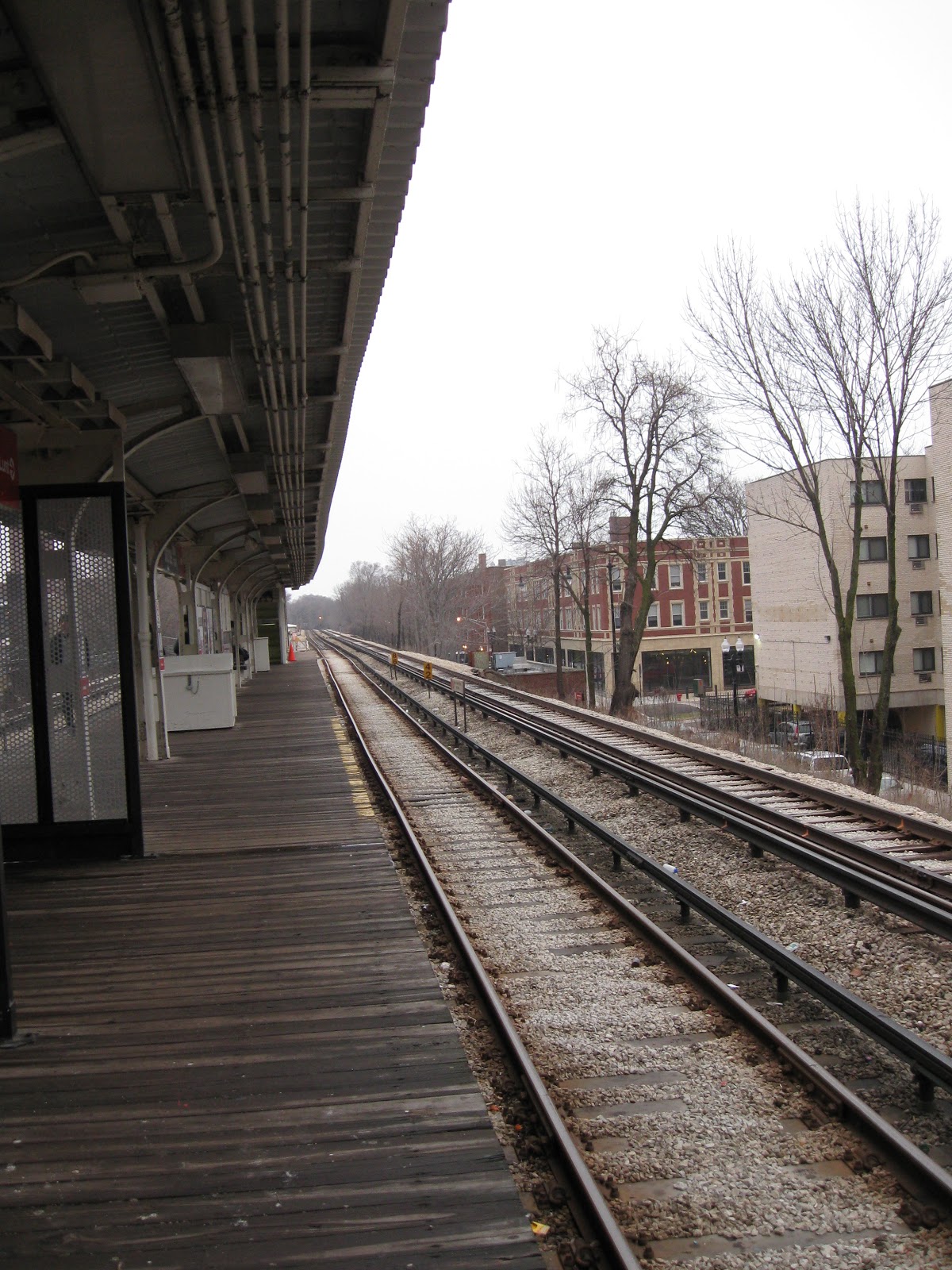

Any guesses on where my conference was held?
Wednesday, April 6, 2011
Third Quarter Update
I wanted to post a quick update on the quarter. I'm leaving tomorrow for a conference, so this should be a very short post.
First, I can already tell that this quarter is going to be the most challenging yet. Statistics, my favorite class from last quarter, used steroids over the break and is now much larger, harder and faster - sort of like Barry Bonds... Between reading the chapters multiple times and my incredible stats teacher, I should be okay. But, it isn't the cakewalk that it was last quarter. On a positive statistics note, though, I think that the content will be much more useful for real-world human science research questions.
I haven't come to any hard conclusions about my measurement theory class. The first lecture seemed clear enough, and I was sort of confused by the TA's strong insistence that we would want to come to her special study groups. Then I read the five assigned chapters, and realized that I had no idea how complicated the theories behind measuring bio-psycho-social concepts are. My mistake! I'm hoping to re-read the five chapters prior to the exam (or maybe every week, I'll just read the whole text again in the hope that something clicks), because one read-through didn't give me much but a serious headache. Why didn't I change my major from nursing to a bench-science, again? Oh yeah, I like people. Well most people, I'm not feeling particularly warm and fuzzy towards the authors of the measurement theory text.
My other theory class is a trip. Both stats and measurement theory will be hard, but with thorough reading and lots of hard work, they are do-able. The adult nursing theory course is a course for the thinking nurse. Those are the ones that require me to stretch...
Finally, my advanced nursing seminar, "Violence and Health," is amazing. Right now, it is the whole reason that I'm in school. There are only two of us from my cohort, everyone else is much farther along in the program, so it is a little intimidating at times, but it is so interesting! I absolutely live for this class!
Tomorrow I leave for a conference in my favorite city (besides this one) in the whole world! (And while I haven't seen every city in the whole world, I do think that I've viewed a representative sample and can make that statement with a statistically calculable amount of confidence....hahaha!) Maybe I'll post a picture from the city and let you guys guess where it was, what do you think?
I'll close with a picture from a walk that my husband and I took a couple of weeks ago:

First, I can already tell that this quarter is going to be the most challenging yet. Statistics, my favorite class from last quarter, used steroids over the break and is now much larger, harder and faster - sort of like Barry Bonds... Between reading the chapters multiple times and my incredible stats teacher, I should be okay. But, it isn't the cakewalk that it was last quarter. On a positive statistics note, though, I think that the content will be much more useful for real-world human science research questions.
I haven't come to any hard conclusions about my measurement theory class. The first lecture seemed clear enough, and I was sort of confused by the TA's strong insistence that we would want to come to her special study groups. Then I read the five assigned chapters, and realized that I had no idea how complicated the theories behind measuring bio-psycho-social concepts are. My mistake! I'm hoping to re-read the five chapters prior to the exam (or maybe every week, I'll just read the whole text again in the hope that something clicks), because one read-through didn't give me much but a serious headache. Why didn't I change my major from nursing to a bench-science, again? Oh yeah, I like people. Well most people, I'm not feeling particularly warm and fuzzy towards the authors of the measurement theory text.
My other theory class is a trip. Both stats and measurement theory will be hard, but with thorough reading and lots of hard work, they are do-able. The adult nursing theory course is a course for the thinking nurse. Those are the ones that require me to stretch...
Finally, my advanced nursing seminar, "Violence and Health," is amazing. Right now, it is the whole reason that I'm in school. There are only two of us from my cohort, everyone else is much farther along in the program, so it is a little intimidating at times, but it is so interesting! I absolutely live for this class!
Tomorrow I leave for a conference in my favorite city (besides this one) in the whole world! (And while I haven't seen every city in the whole world, I do think that I've viewed a representative sample and can make that statement with a statistically calculable amount of confidence....hahaha!) Maybe I'll post a picture from the city and let you guys guess where it was, what do you think?
I'll close with a picture from a walk that my husband and I took a couple of weeks ago:

Wednesday, March 9, 2011
Really, really correlated
I know that I am finally reaching my limit of asceticism.
I know this because I've started re-reading the Kinsey Millhone series at night for comfort. Her character revels in living as a minimalist, alone in California. She takes pleasure in all the things that can make me feel lonely if I don't constantly scan for that feeling and nip it in the bud as soon as I notice it. For right now, that series is the most relaxing thing at the end of the day.
It shouldn't be surprising that my current state of bibliophilic decompensation is appearing in week 10 of the 10 week quarter. Today, I added to my grant draft and sent my most recent (incomplete) version to the professor. As the class is pass/fail, and mainly informative, she did not require a completed draft to pass. That is good, since I don't have a completed draft.
Next, I worked on my final statistics problem set. I should have known that I was nearing my limit when I got a correlation coefficient of 1.48 (which is impossible for that particular test) and considered writing the professor a note that said, "Hi. I realize that this result is impossible. And that realization is completely due to your excellent teaching. However, I've attempted to find my math error for over an hour and simply can not locate it. How about we just say it's really, really correlated and call it a day?" While I think that the prof, who has a remarkable sense of humor considering his subject, would laugh, he wouldn't give me points for creativity.
I ended the day by completing the first draft of the final paper for my remaining class. This would be a cause for celebration, but I know that it needs work. And I only have a few more days to polish it. Polished papers are really the goal, since they count for so much of the grades in the program.(And of course are focused on our specific topics and therefore teach us as we write them.) This one is worth 50% of my course grade.
Overall, this quarter is drawing to a close. And while there wasn't any one thing that I can say I disliked about this quarter, it also wasn't as enjoyable as the first.
Yay! for getting through it.
Saturday, February 26, 2011
Onward and Upward
For clarification, this quarter has been a very different experience than last quarter. Out of my three classes, only statistics hasn't been a painful struggle. (And while I would like to take some credit for this, it really is a result of the strength of the instruction of my statistics professor). I am lucky that I am close with my classmates, but the reality of this program is that it isn't a group effort. Which leads me to the first hard-learned lesson of this quarter:
1. You have to own your area of research.
The point of this program isn't to be the best generalist. The point isn't to be a mini medical doctor. The point isn't to become the best future educator. The point is to be an expert in one area of nursing knowledge. I fully understand why the average time to complete a PhD in the U.S. is six years. By the end of last quarter I noticed, and my classmates confirmed it in themselves, a growing aversion to our topics. We wanted to talk or read about ANYTHING other than our topics of research. Anything. Just one quarter of looking closely at my topic clarified for me one very important lesson: how little I knew about it. And that is a perfect lead in to the second lesson of this quarter.
2. I now know *just enough* to know how much I don't know.
I feel like my cohort and I started this journey like a group of settlers moving west. (Does anyone remember playing Oregon Trail...?) We packed what we thought we might need. For example, I brought my clinical experience, certainly not the twenty or thirty years of nursing experience that some of my classmates bring with them, but it encompasses a full third of my life. Some of my classmates brought their previous research experience. We gathered everything we knew or had learned and we headed out. Our goal, for this metaphor, was the peak of a mountain. Pretty quickly we noted that we were going uphill. And we congratulated ourselves. "Look we're climbing!" About half way through this second quarter, we reached a plateau. While we knew we weren't at the top, we were pretty excited. Until we stopped to look ahead.
We had reached the top of a gently rolling hill. What we could see clearly was just how much farther there was to travel before we even reached the base of the mountain. We all stupidly turned to each other and said, "this might be harder than we thought."
This was the quarter where one brave classmate of mine raised her hand, and asked for some clarification on the percentage of people who actually finish. The professor gracefully sidestepped the question. I went home that night and tried to bring myself to Google the answer. I never did. I don't want to know. Which is a pretty good lead in to my next lesson.
3. This could be an isolating process.
I have only ever witnessed one other nurse achieve a PhD. Obviously, I've known other nurses after they finished their doctorates. But I've only known one person through their doctorate. And, while it isn't something that I'm completely comfortable writing, I've only ever known one PhD prepared nurse of Mexican descent, and I met her here. In fact, before I came to my program, I had only ever met four people of color with doctorates. Ever. My cohort is 18 people. I am the only person of Mexican descent. There is only one other PhD nursing student, in all the cohorts, that I've met who is Latina.
I shouldn't be shocked by this. I was a McNair Scholar. The McNair Scholars Program is specifically designed to encourage high-achieving undergraduate minority students to pursue graduate education. I never thought this would affect me. In my defense, I went to high school, college, and graduate school in Chicago! I never felt like a minority there! I also really didn't think it applied to nursing. For the love of Pete, we were like the United Nations in my undergraduate program. Multi-culturalism was perhaps less well represented in my master's program, but I never really noticed; I had no doubt that I could finish. Here, I'm looking around for reassurance that this is a doable endeavor, and I don't see very many people who look like me. It's a little bit freaky.
So there you have it. Second quarter is a little less smooth. Week 8 is bringing a resurgence of my angst.
1. You have to own your area of research.
The point of this program isn't to be the best generalist. The point isn't to be a mini medical doctor. The point isn't to become the best future educator. The point is to be an expert in one area of nursing knowledge. I fully understand why the average time to complete a PhD in the U.S. is six years. By the end of last quarter I noticed, and my classmates confirmed it in themselves, a growing aversion to our topics. We wanted to talk or read about ANYTHING other than our topics of research. Anything. Just one quarter of looking closely at my topic clarified for me one very important lesson: how little I knew about it. And that is a perfect lead in to the second lesson of this quarter.
2. I now know *just enough* to know how much I don't know.
I feel like my cohort and I started this journey like a group of settlers moving west. (Does anyone remember playing Oregon Trail...?) We packed what we thought we might need. For example, I brought my clinical experience, certainly not the twenty or thirty years of nursing experience that some of my classmates bring with them, but it encompasses a full third of my life. Some of my classmates brought their previous research experience. We gathered everything we knew or had learned and we headed out. Our goal, for this metaphor, was the peak of a mountain. Pretty quickly we noted that we were going uphill. And we congratulated ourselves. "Look we're climbing!" About half way through this second quarter, we reached a plateau. While we knew we weren't at the top, we were pretty excited. Until we stopped to look ahead.
We had reached the top of a gently rolling hill. What we could see clearly was just how much farther there was to travel before we even reached the base of the mountain. We all stupidly turned to each other and said, "this might be harder than we thought."
This was the quarter where one brave classmate of mine raised her hand, and asked for some clarification on the percentage of people who actually finish. The professor gracefully sidestepped the question. I went home that night and tried to bring myself to Google the answer. I never did. I don't want to know. Which is a pretty good lead in to my next lesson.
3. This could be an isolating process.
I have only ever witnessed one other nurse achieve a PhD. Obviously, I've known other nurses after they finished their doctorates. But I've only known one person through their doctorate. And, while it isn't something that I'm completely comfortable writing, I've only ever known one PhD prepared nurse of Mexican descent, and I met her here. In fact, before I came to my program, I had only ever met four people of color with doctorates. Ever. My cohort is 18 people. I am the only person of Mexican descent. There is only one other PhD nursing student, in all the cohorts, that I've met who is Latina.
I shouldn't be shocked by this. I was a McNair Scholar. The McNair Scholars Program is specifically designed to encourage high-achieving undergraduate minority students to pursue graduate education. I never thought this would affect me. In my defense, I went to high school, college, and graduate school in Chicago! I never felt like a minority there! I also really didn't think it applied to nursing. For the love of Pete, we were like the United Nations in my undergraduate program. Multi-culturalism was perhaps less well represented in my master's program, but I never really noticed; I had no doubt that I could finish. Here, I'm looking around for reassurance that this is a doable endeavor, and I don't see very many people who look like me. It's a little bit freaky.
So there you have it. Second quarter is a little less smooth. Week 8 is bringing a resurgence of my angst.
Saturday, February 12, 2011
Post-its, packages, and passes
Last week was the heaviest week of the quarter. I had a statistics mid-term, an event that I had planned for my student organization and the first part of my grant draft due. Yikes. But, it passed. The statistics mid-term didn't seem that bad (I hope I'm not getting cocky, we'll get our grades on Tuesday), the event was a grand success, and while nobody stood up and yelled, "Your grant proposal is amazing!" they also didn't tell me to get lost. So, overall, I'll take it.
I had some big plans for the weekend of getting ahead and drafting final papers and starting a knitted baby sweater for my goddaughter and cleaning the bathroom. So far, I've managed to practice my guitar, show up at my volunteer job, buy post-its, find a padded envelope for mailing and make lasagna. Close enough, right? I do want to clean and organize my desk this weekend. It is approaching absolute chaos and if its current rate of mess-accumulation continues, I won't be able to find the keyboard soon. I do not work well in disorder, so something has to be done before finals.
The weather here has been amazing. It is funny. When I lived in the desert every single day was pristine. But I hated the place so much that I never appreciated the weather. I also disliked the same-ness of it. I would want to cry because it was another sunny day. (I know?! Whining about perfect weather!) But it was like the movie Groundhog Day. I couldn't tell what time of year it was or if time was even passing. It was surreal and everything felt like an over-exposed photo, even the people seemed bleached clean of personality. Here, I enjoy the sun again; partly, because it rains! Tomorrow is supposed to be another beautiful day and then we're expecting rain all next week. I'm excited for both a sunny day tomorrow and rain for next week... maybe I just like it here better.
I had some big plans for the weekend of getting ahead and drafting final papers and starting a knitted baby sweater for my goddaughter and cleaning the bathroom. So far, I've managed to practice my guitar, show up at my volunteer job, buy post-its, find a padded envelope for mailing and make lasagna. Close enough, right? I do want to clean and organize my desk this weekend. It is approaching absolute chaos and if its current rate of mess-accumulation continues, I won't be able to find the keyboard soon. I do not work well in disorder, so something has to be done before finals.
The weather here has been amazing. It is funny. When I lived in the desert every single day was pristine. But I hated the place so much that I never appreciated the weather. I also disliked the same-ness of it. I would want to cry because it was another sunny day. (I know?! Whining about perfect weather!) But it was like the movie Groundhog Day. I couldn't tell what time of year it was or if time was even passing. It was surreal and everything felt like an over-exposed photo, even the people seemed bleached clean of personality. Here, I enjoy the sun again; partly, because it rains! Tomorrow is supposed to be another beautiful day and then we're expecting rain all next week. I'm excited for both a sunny day tomorrow and rain for next week... maybe I just like it here better.
Monday, January 31, 2011
Week Five
For the first time this quarter, I finally feel like I am in control of my workload! The project that I've been working on and that has been hanging over my head for the last two quarters is ready to be submitted. It isn't done, but it's done for now.
Also, I have an actual question that I might be able to work with and it is certainly a starting point for the dissertation question. The question is still in its infancy, but its existence makes me believe that I can do this. It also gives me something to work with for my grant writing class, which I've been struggling with the whole quarter.
While I'm very glad to be at this better place, I'm also pretty startled to look up and realize that I am half way through this second quarter. It is moving entirely too fast. I can already envision the coming scramble in the final weeks.
As a reward, I am planning to spend tonight not worrying about anything school related. This whole quarter, even when I have been doing other things, I have felt a constant thrum of worry about my classes, the project and the future. Tonight, because I am feeling so accomplished, I am not going to feel that worry at all.
I wish that I had a picture to post, but I haven't taken any in a long while. Maybe next time...
Also, I have an actual question that I might be able to work with and it is certainly a starting point for the dissertation question. The question is still in its infancy, but its existence makes me believe that I can do this. It also gives me something to work with for my grant writing class, which I've been struggling with the whole quarter.
While I'm very glad to be at this better place, I'm also pretty startled to look up and realize that I am half way through this second quarter. It is moving entirely too fast. I can already envision the coming scramble in the final weeks.
As a reward, I am planning to spend tonight not worrying about anything school related. This whole quarter, even when I have been doing other things, I have felt a constant thrum of worry about my classes, the project and the future. Tonight, because I am feeling so accomplished, I am not going to feel that worry at all.
I wish that I had a picture to post, but I haven't taken any in a long while. Maybe next time...
Friday, January 21, 2011
Questions about THE question
I thought I'd post on THE question today. It is a topic that has been brought up by a reader and a topic that is particularly important to me right now.
The hard truth about doctoral studies is that at some point you have to do something that enables you to write your dissertation. That something, that you do, has to contribute new information to your scientific community.
This may not seem like such a daunting thing to some of my readers. In fact, I wasn't that concerned about it when I applied. As an undergraduate I participated in a pilot study, doing quite a bit of the research myself (though guided closely by my mentor). In my master's program, I performed a secondary data analysis and I should probably have tried to publish the results as they would have contributed new information. Some people do a secondary data analysis for their dissertation. However, (and yes you can read a giant, capitalized BUT there) from what I've determined so far, it is different at the doctoral level.
It is different because we aren't doing this as part of a master's project, or for a paper. We won't be allowed to just take some data and run some tests on it. Even if the machinations look similar, the underlying foundation has changed. First, a research doctoral student should be asking a specific question that was determined to be important by studying a general topic to the point of absurdity. And, the way that one asks that question, analyzes the data that result from the question, and presents and disseminates the data are all designed by the student. That's why two years of study are required before the PhD-powers-that-be (also known as your committee) let you make the final, absolute, resolute, certain choice of THE question: Your research question. (Some people do it faster, some people do it slower - two years seems to be the average amount of time it takes to be really prepped to ask a good question with a solid foundation....)
If I've learned anything so far, it's that the final product of the published paper is fairly removed from the actual work of the research. The published paper is a pretty representation of the question, which motivated the design, which directed a researcher's attempts to gain entree into their research location, which probably preceded begging for grants, funds, MONEY! to perform the study from a bunch of people using forms that are just short of incomprehensible. And all of that came after reading as much of the literature on the general topic, then on the framework of the type of research, then on the theoretical basis for both, then back again to the literature for the specifics. And it is a long process from the start of that to the end of the dissertation.
However, (there's that giant BUT again) the profs really like us to think about it along the way. So for classes, they say things like, "Pick a question. It doesn't have to be your dissertation question, but pick a question, and show me how you would..." do a critical literature review, contact an expert, perform a concept diagram on the topic, ask the question in a qualitative way, ask the question as a quantitative question.... etc. etc. etc. They want us to practice the thinking of it. Every time we do, we see the problems in our thinking or design and we get closer to THE actual question. Oh, and to add to the joy - the student does this in the full view of her peers.
Regardless of the angst (I use the word with all its associated connotations. It feels just like teenage fretting at times), in the end it works. People get through. Their classes help them hone their skills, their peers help them see the flaws in their thinking, the profs help you negotiate the process and nurses actually get doctorates.
I hope.
So, here are the important points of my above discussion:
1. Very few people (though, some do) know their dissertation question when they walk in the door.
2. Part of the fun of classes with the other people in your cohort is that you get to hear everyone's topics, areas of interest, and questions. You also get to hear them evolve.
3. At some point, someone is going to want to know EXACTLY what you want to ask, research, etc. to get out of school. For once and for all. (These are nurses after all. We're a practical bunch. You start talking about the 7-year program and some kindly prof is going to grab you by your scruff and give you a little shake.)
4. Just remember, once the dissertation is complete, the research isn't supposed to end.... But your "program of research" is a whole 'nother topic.
The hard truth about doctoral studies is that at some point you have to do something that enables you to write your dissertation. That something, that you do, has to contribute new information to your scientific community.
This may not seem like such a daunting thing to some of my readers. In fact, I wasn't that concerned about it when I applied. As an undergraduate I participated in a pilot study, doing quite a bit of the research myself (though guided closely by my mentor). In my master's program, I performed a secondary data analysis and I should probably have tried to publish the results as they would have contributed new information. Some people do a secondary data analysis for their dissertation. However, (and yes you can read a giant, capitalized BUT there) from what I've determined so far, it is different at the doctoral level.
It is different because we aren't doing this as part of a master's project, or for a paper. We won't be allowed to just take some data and run some tests on it. Even if the machinations look similar, the underlying foundation has changed. First, a research doctoral student should be asking a specific question that was determined to be important by studying a general topic to the point of absurdity. And, the way that one asks that question, analyzes the data that result from the question, and presents and disseminates the data are all designed by the student. That's why two years of study are required before the PhD-powers-that-be (also known as your committee) let you make the final, absolute, resolute, certain choice of THE question: Your research question. (Some people do it faster, some people do it slower - two years seems to be the average amount of time it takes to be really prepped to ask a good question with a solid foundation....)
If I've learned anything so far, it's that the final product of the published paper is fairly removed from the actual work of the research. The published paper is a pretty representation of the question, which motivated the design, which directed a researcher's attempts to gain entree into their research location, which probably preceded begging for grants, funds, MONEY! to perform the study from a bunch of people using forms that are just short of incomprehensible. And all of that came after reading as much of the literature on the general topic, then on the framework of the type of research, then on the theoretical basis for both, then back again to the literature for the specifics. And it is a long process from the start of that to the end of the dissertation.
However, (there's that giant BUT again) the profs really like us to think about it along the way. So for classes, they say things like, "Pick a question. It doesn't have to be your dissertation question, but pick a question, and show me how you would..." do a critical literature review, contact an expert, perform a concept diagram on the topic, ask the question in a qualitative way, ask the question as a quantitative question.... etc. etc. etc. They want us to practice the thinking of it. Every time we do, we see the problems in our thinking or design and we get closer to THE actual question. Oh, and to add to the joy - the student does this in the full view of her peers.
Regardless of the angst (I use the word with all its associated connotations. It feels just like teenage fretting at times), in the end it works. People get through. Their classes help them hone their skills, their peers help them see the flaws in their thinking, the profs help you negotiate the process and nurses actually get doctorates.
I hope.
So, here are the important points of my above discussion:
1. Very few people (though, some do) know their dissertation question when they walk in the door.
2. Part of the fun of classes with the other people in your cohort is that you get to hear everyone's topics, areas of interest, and questions. You also get to hear them evolve.
3. At some point, someone is going to want to know EXACTLY what you want to ask, research, etc. to get out of school. For once and for all. (These are nurses after all. We're a practical bunch. You start talking about the 7-year program and some kindly prof is going to grab you by your scruff and give you a little shake.)
4. Just remember, once the dissertation is complete, the research isn't supposed to end.... But your "program of research" is a whole 'nother topic.
Sunday, January 16, 2011
Week Two Update
As I head into week three of the quarter, I wanted to post something a little more upbeat than my previous two posts from this quarter. I think that I've worked through some of my winter quarter angst, and I thought that I would share the process with all the potential students. The two reasons that I've been able to work through my worry are my classmates and this weekend, which was restful.
This quarter, my two primary classes are the first of the statistics series that I will take during the program and a class that is called "Health and Human Systems." I know. It isn't a very elucidating name. Basically, it is a class to teach us, as researchers, how to find, what we call "the gaps" in the literature. (The gaps are the things that we don't know or haven't answered yet. They are the places that need more knowledge.One finds these by reading the literature and looking for the gaps, hence their nickname.) Or that is my interpretation of the class. So far, all we've done is try to perform a literature search on our topics. Which was when I hit my first bump in the road.
We all have our areas of interest. Mine is quite clear in my head. But outside of my head, it is actually a large, historied, and occasionally, contentious area of medical research. I need to narrow my focus. The instructors believe that to do this we should pick a research question. I agree, in theory, but I'm not ready to do that...yet. I would love to have a specific research question. That would make things a LOT easier. However, I haven't yet identified the gaps in the literature, so how do I know what to ask? And so begins a frighteningly circular argument which prevents me from sleeping at night.
So, as I tried to perform this literature search, I realized that my topic was huge. I have read a lot on my very large topic, so in my head it made a lot of sense, but on paper, it looked like a hot mess. So I tried to narrow it. I thought that I had done a good job of this... the professors did not. The thing about the doctoral program is that, as a learning exercise, the profs want you to get yourself out of your own messes. No one is going to hold your hand. (I don't think that they would really let us go too far down, but they might let us stumble along for a while to teach us to pay better attention...) So after letting me know that they were not completely satisfied with my work, they then sent me on my way. And that way led to sleepless nights and extreme worry.
The reason that I am not having a complete nervous breakdown is that I found out I was not completely alone. Apparently, almost all of us walked out of that class with similar comments. Oh! The relief! Maybe I am not completely hopeless! Once again, it is good to have classmates. I still had to spend the week working through my issue and really determining what area within my ginormous topic I was going to focus on for this class, but at least, I am not alone!
And then, this weekend, I actually took a small break. My husband is here and we went to see one of my classmates perform in the community symphony. It was wonderful and relaxing and uplifting and shut off my worry for a good two hours. Afterward we all went for German food and a nice city walk. This mini-crisis has reminded me how very important good friends are during this process. It could be very solitary work - not one of us is interested in the exact same topic - but we are not lonely because we are all taking the same initial classes. Plodding though our steps may be, we are at least making progress all together.
I feel much more ready to start week three than I did week two, and that is a small victory.
This quarter, my two primary classes are the first of the statistics series that I will take during the program and a class that is called "Health and Human Systems." I know. It isn't a very elucidating name. Basically, it is a class to teach us, as researchers, how to find, what we call "the gaps" in the literature. (The gaps are the things that we don't know or haven't answered yet. They are the places that need more knowledge.One finds these by reading the literature and looking for the gaps, hence their nickname.) Or that is my interpretation of the class. So far, all we've done is try to perform a literature search on our topics. Which was when I hit my first bump in the road.
We all have our areas of interest. Mine is quite clear in my head. But outside of my head, it is actually a large, historied, and occasionally, contentious area of medical research. I need to narrow my focus. The instructors believe that to do this we should pick a research question. I agree, in theory, but I'm not ready to do that...yet. I would love to have a specific research question. That would make things a LOT easier. However, I haven't yet identified the gaps in the literature, so how do I know what to ask? And so begins a frighteningly circular argument which prevents me from sleeping at night.
So, as I tried to perform this literature search, I realized that my topic was huge. I have read a lot on my very large topic, so in my head it made a lot of sense, but on paper, it looked like a hot mess. So I tried to narrow it. I thought that I had done a good job of this... the professors did not. The thing about the doctoral program is that, as a learning exercise, the profs want you to get yourself out of your own messes. No one is going to hold your hand. (I don't think that they would really let us go too far down, but they might let us stumble along for a while to teach us to pay better attention...) So after letting me know that they were not completely satisfied with my work, they then sent me on my way. And that way led to sleepless nights and extreme worry.
The reason that I am not having a complete nervous breakdown is that I found out I was not completely alone. Apparently, almost all of us walked out of that class with similar comments. Oh! The relief! Maybe I am not completely hopeless! Once again, it is good to have classmates. I still had to spend the week working through my issue and really determining what area within my ginormous topic I was going to focus on for this class, but at least, I am not alone!
And then, this weekend, I actually took a small break. My husband is here and we went to see one of my classmates perform in the community symphony. It was wonderful and relaxing and uplifting and shut off my worry for a good two hours. Afterward we all went for German food and a nice city walk. This mini-crisis has reminded me how very important good friends are during this process. It could be very solitary work - not one of us is interested in the exact same topic - but we are not lonely because we are all taking the same initial classes. Plodding though our steps may be, we are at least making progress all together.
I feel much more ready to start week three than I did week two, and that is a small victory.
Friday, January 7, 2011
Chicago Nostalgia
It isn't always schoolwork that makes this process difficult. I'm starting to realize that good grades, active classwork, and strong effort aren't going to be nearly enough to make the PhD a worthwhile achievement. What's going to get me hired to teach and research when I graduate might be more dependent on what I did outside of the classes: publications, research grants, and presentations at national conferences, than any grade I receive. Scary stuff. A large percentage of my cohort has been published already. I expect that almost all of us will have submitted something for publication by the end of the first year. I have a classmate whose publication goal is one per quarter, at least four per year.
This pressure weighs heavily on me. This morning I woke up at 6:30 with thoughts for the project that I've been working on, and I needed to put them down on paper RIGHT THEN. I think that I had only fallen asleep two or three hours before because of my tossing and turning while I worried about this project. I've been writing almost continuously since I woke up. I want this project to be something great and that sense of pressure keeps me up a lot of nights.
My cohort has a term for the profs that are great. (Great in this context means that they have changed the world with their research and that they teach, write and raise their families with aplomb.) We call them "rockstars." The term, when used by my cohort, is imbued with respect, awe, a little fear and a deep longing to one day be among that group. One of our TAs yesterday summed up rockstars in nursing by saying, "You might ask a question that we don't know the answer to. Unlike Dr.___, we're only human." I'm working on this project with one of these superhuman nurses, a real rockstar of nursing research, and I want to produce something that is worthy of that honor.
When I look back on the first quarter of the doctoral program and this project, there will be a soundtrack playing in my head. This soundtrack is compiled of 15 songs that I've been playing on repeat since I started the program. On iTunes I've labeled this group of songs "Chicago Nostalgia." The music in this grouping reminds me a lot of the music that my friends and I danced to in high school, hence its name. It is loud, throbbing and entirely offensive to people who aren't as actively stressed as I am.
I was playing it on my computer speakers, but my husband started calling it the "Oh God, turn it off" music, the cat was hiding under the bed, and the neighbors were banging on the floor (our ceiling) to express their displeasure. Now, I only listen to it on my iPod. But, really, I would never have guessed that taking a work break to crazy-dance to Kinky's "Mas" wasn't relaxing to everybody if I hadn't seen the evidence for myself....
This pressure weighs heavily on me. This morning I woke up at 6:30 with thoughts for the project that I've been working on, and I needed to put them down on paper RIGHT THEN. I think that I had only fallen asleep two or three hours before because of my tossing and turning while I worried about this project. I've been writing almost continuously since I woke up. I want this project to be something great and that sense of pressure keeps me up a lot of nights.
My cohort has a term for the profs that are great. (Great in this context means that they have changed the world with their research and that they teach, write and raise their families with aplomb.) We call them "rockstars." The term, when used by my cohort, is imbued with respect, awe, a little fear and a deep longing to one day be among that group. One of our TAs yesterday summed up rockstars in nursing by saying, "You might ask a question that we don't know the answer to. Unlike Dr.___, we're only human." I'm working on this project with one of these superhuman nurses, a real rockstar of nursing research, and I want to produce something that is worthy of that honor.
When I look back on the first quarter of the doctoral program and this project, there will be a soundtrack playing in my head. This soundtrack is compiled of 15 songs that I've been playing on repeat since I started the program. On iTunes I've labeled this group of songs "Chicago Nostalgia." The music in this grouping reminds me a lot of the music that my friends and I danced to in high school, hence its name. It is loud, throbbing and entirely offensive to people who aren't as actively stressed as I am.
I was playing it on my computer speakers, but my husband started calling it the "Oh God, turn it off" music, the cat was hiding under the bed, and the neighbors were banging on the floor (our ceiling) to express their displeasure. Now, I only listen to it on my iPod. But, really, I would never have guessed that taking a work break to crazy-dance to Kinky's "Mas" wasn't relaxing to everybody if I hadn't seen the evidence for myself....
Subscribe to:
Posts (Atom)